
Amar Shahid Shree D. M. Barad Arts, Commerce & Science College
Duration Year - 2025 to 2030
INSTITUTIONAL DEVELOPMENT PLAN
Current Status of the College
General profile
- Name and Address of the college : Amar Shahid Shree D.M.Barad
Arts, Commerce & Sciencce
College – Ghunsiya (Gir)
Ta – Talala (Gir),
Dist – Gir Somnath, Pin – 362150
Email : dmbaradcollege2000@gmail.com
- Year of Establishment : 2000
- Institutional Status : Rural Area
- Number of Programme offered
UG : B.A., B.Com, B.Sc
PG : M.A. (Sociology, English & Gujarati),
M.Com, M.Sc(Chemistry & Microbiology
About the College
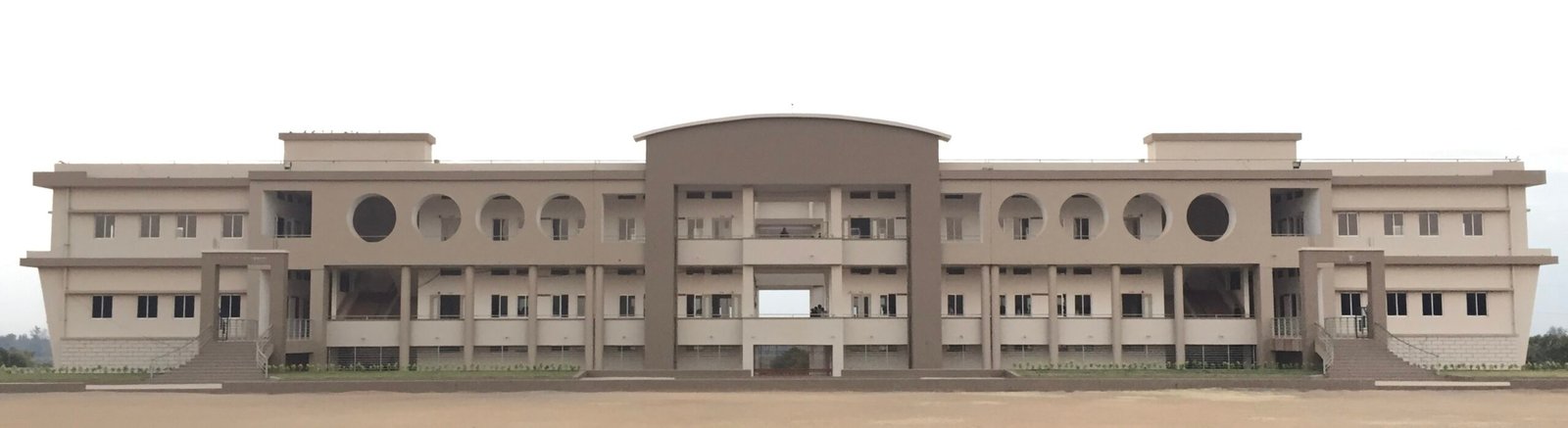
Shree D.M.Barad College is a leading co-educational institution of higher education in Gir Somnath district. The college is imparting higher education in a rural area in Gir Somnath district of Gujarat state. This educational institution is providing higher education in Arts, Commerce & Science to economically and educationally backward students. This college is situated in a rural backward area. From here, a large number of students are doing their duty in various fields after getting quality education. Currently around 3100 students are getting education in Arts, Commerce & Science. In B.A., Gujarati, English, Sanskrit, Sociology, Hindi, Psychology are being studied in this institute. so as studying in B.Com and B.Sc in Chemistry, Microbiology, Zoology, Maths, Physics, Botany along with UG courses. This institute also offers PG course from 2019 onwards. Including M.Sc (Chemistry, Microbiology), M.Com (Commerce & Management) and M.A. (Sociology, English & Gujarati) included. This college is affiliated to Bhakta kavi Narsinh Mehta University – Junagadh and offers NEP – 2020 courses in all UG and PG programs of the college. Spread over a huge campus, this college provides a natural conducive environment to learning. The purpose of this institution is to empower the youth through dissemination of knowledge and the college is capable of upliftment of various classes and communities. In this way the college is contributing to social and national development.
Introduction to IDP
The NEP Taskforce of the College has undertaken the mission of designing an Institutional Development Plan for a period of five years begin from the Academic Year 2025-2026 to the Academic Year 2029-2030 for balanced development of the College. The criteria set by various quality education have been taken.
Guiding Principles of IDP, DMB College
The NEP Task Force has considered the following main objectives for preparing the Institutional Development Plan:
- Vision Statement of the College
The vision of this College is to provide quality higher education with an attempt to inspire, prepare, and empower students of its area to succeed in a changing world.
- Needs Assessment through Consultation
- Contributing in National Development
- Encourage Global Competencies among Students
- Inculcating a Value System among Students
- Promoting the Use of Technology
- Quest for Excellence
III. Quality Policy of the college
This College is committed to a culture of quality enhancement through a process of continuous quality improvement in all its endeavours, namely, teaching-learning, research, student support and extension services. For all round development of the students, the college is committed to provide platforms to focus on various areas of education, art and knowledge in the line of ‘Saptadhara’ or Seven Bands. These are,
- Gyan Dhara (Knowledge Band)
- Srijanatmak Abhivyakti Dhara (Creative Expression Band)
- Rang, Kala, Kaushalya Dhara (Fine Arts Band)
- Natya Dhara (Theatre band)
- Sangeet, Nritya Dhara (Music and Dance Band)
- Yog Vyayam Khel Dhara (Yoga and Sports Band)
- Samudayik Seva Dhara (Community and Social Service Band)
The quality policy is also communicated and understood by all stakeholders within the college and is reviewed for continuing suitability.
- Guidelines of National Education Policy-2020
As per NEP 2020, the purpose of the education system is to develop good human beings capable of rational thought and action, possessing compassion and empathy, courage and resilience, scientific temper and creative imagination, with sound ethical values. The policy aims at producing engaged, productive, and contributing citizens for building an equitable, inclusive, and pluralistic society as envisaged by our Constitution.
Aims and Objectives of the Institutional Development Plan
The basic objective of the Institutional Development Plan is to make students a successful citizen by improving the quality and infrastructure of educational institutions. Based on the Institutional Development Plan, the college will develop initiatives, assess the progress and reach the goals set therein, which can then become the basis of Govt. funding. Considering the background of the college as an institution
imparting quality education in science, arts, and vocational field, the college has identified the broad aim of IDP as follows:
- To create a supportive academic environment for students ingrained with sincerity, discipline and commitment.
- To institute a sustained quality system embedded with a conscious, consistent and programmed action
- To mould humane citizens of the nation to make skilled manpower through effective use of emerging technological tools and to bridge the gap between social needs and higher education.
- To bring three ‘H’ together in an integrated manner, namely, Hand (to develop skills), Head (to gain advanced knowledge), Heart (to inculcate human values)
ROAD MAP FOR IMPLEMENTATION OF NEP-2020
Step 1 : Analysis of the present scenario in terms of ‘Access’, ‘Quality’ and ‘Future Readiness
Access | |
Equity including Gender Parity | • The college fosters equal opportunity to all. • Organizing various programmes on gender equity |
Inclusion including Socioeconomic Deprived Groups (SEDGs) | • DMB College, Ghunsia (Gir) which is affiliated to Bhakta Kavi Narsinh Mehta University, Junagadh follows the reservation policy of Govt. Various programmes are offered in the college regarding the admission of students from Gujarat.• Financial aid for students financially• Provision of regular guidance of students• Steps to increase student’s access to face-to-face counseling |
Quality | |
Multidisciplinary and holistic education | • The college offers BA, BCom, BSc, MA(Sociology, English & Gujarati), MCom (Commerce & Management), MSc (Chemistry & Microbiology). Programme under Bhakta Kavi Narsinh Mehta University-Junagadh• Offers various add on courses in addition to the regular programmes offered by the affiliated university• University offering skill enhancement courses as per Junagadh NEP-2020 Syllabus Establishment of various student clubs for nurturing the creativity of students |
Flexibility of courses and student mobility | • Both UG and PG courses are running as per new NEP – 2020.• Offers various value added and skill based add on courses |
Indian Knowledge System | • This College offers UG programme• Students can enroll themselves in various add-on courses on Indian Knowledge System, e.g. For value education, human rights etc. |
Research, Innovation and Ranking | • Department of Chemistry has a research laboratory• Teachers regularly publish papers in reputed journals. Under are the approved research guidelines in the college Various Departments of Bhakta Kavi Narsinh Mehta University Junagadh |
Capacity building of faculty | • Drinking water facility, toilets, teaching aids, libraries, laboratories and overall pleasant college• ICT equipped classroom College organizes periodic faculty development program as per requirement.• Encourages faculty members to participate in FDP, workshops, seminars by granting duty leave, sponsoring Registration Fee. |
| Future Readiness | |
Enhancing employability through internship/apprenticeship | • The college has career counseling and placement cell under which various career counseling programmes and Coaching is organized for competitive exams.• Add few skill based courses. |
Transforming education through integration of technology | • The college has developed its own learning management system for online mode of teaching-learning.• Facilitates access to the central library of the college.• Process of using various online platforms for teaching-learning• Establishment of e-Language and Multimedia Lab |
Internationalization | • No step has been taken yet |
Governance | • The governance is taken care of by Governing Body constituted by Department of Higher Education, Gujarat with Principal as the member Secretary • Implementation of e-governance in various areas of operation, namely, administration, finance, students admission and examination |
Step 2: Envision transformation of the institution for next 5 years in lines of NEP-2020 and draw a strategic plan of action
Institutional Development Plan is the basis on which the college will frame the initiatives, assess the progress and reach the goals set therein. In keeping with the vision to convert into an autonomous college that will empower to drive excellence, This college envisages the following initiatives,
- 1. Introduce contemporary subjects in UG level, like, Artificial Intelligence,
Cloud Computing, Data Analysis, Cyber security, etc. to develop these various
important skills in students.
- Provide more financial assistance and scholarships to socio-economically
disadvantaged students
- A transparent and stated process of faculty recruitment
- Retention of faculty members and motivating them towards advancing the
students, institution, and profession
- Autonomous, more accountable, decentralized and transparent internal
governance.
- Strong Grievance Redressal system
- Strictly administer all no-discrimination and anti-harassment rules
- Continuous Professional Development (CPD) for faculty and staff, and
leadership training for Principal and others
- Encouraging and empowering the faculty to conduct innovative teaching and
pedagogy, research and service which will motivate them to do outstanding
creative work.
- Strengthening the student support system
- Develop and use supportive technology tools for better participation and
learning outcomes.
- Emphasis to increase the employability potential of the students
- Develop bridge courses for students of disadvantaged educational backgrounds
- Provide regular counseling and mentoring programmes for social, emotional
and academic support
- Develop more quality study material in local languages
- Encourage research work among faculty and students
- Augmentation of basic infrastructure facilities, clean drinking water, clean
working toilets, sports facilities, and pleasant classroom spaces and campuses.
- Increasing hostel facilities as per need.
- Providing medical facilities for all students
- Undertake programme/add on course/activities to sensitise faculty, staff and
Students
- Improving alumni engagement in various fields of activities of the college
- Fostering greater engagement with the local community
- Incorporating the principle of sustainability in all sphere of policies as well as
activities.
24. Allocating for an ecologically sustainable campus by preserving biodiversity using renewable sources of energy and giving importance to resilience (to reduce natural disasters and accidents), sustainability, utilities and services, safety
Step 3: Define the mission statement of the institution to identify the goals, strengths, opportunities, priorities and commitments
Mission statement of the college:
This College strives to achieve its vision
- Committing itself to intellectual exercises based on effective teaching, interaction
programme and exchanges in order to lift the diverse communities from
stagnation to development,
- Nurturing emerging disciplines and the creation of new knowledge and artistic
expression in response to a rapidly changing world,
- Making effective use of the emerging technological tools to create skilled
manpower and to bridge the gap between social needs and higher education.
- Creating a congenial atmosphere to create and disseminate knowledge of human
experience, thought and creativity to advance human welfare in all its dimensions,
Step 4: Identify the strengths and capacity (human and financial) in regard to organizational gaps and develop the process to mitigate these gaps Present Strength and Capacity
- Cordial relationship among all the stakeholders
- Functioning in the plural and multicultural atmosphere
- Driven by the mission statement of imparting knowledge to all
- Admission of students across all communities and areas
- Student-centric teaching-learning process
Few steps to reduce the gaps
- Preparation of syllabus to start some contemporary subjects by faculty members
• Organizing regular professional development programme for faculty and staff• Organize industry-academic meet to improve the placement rate
- more classrooms, laboratories, drinking water facilities, toilets, gymnasium,
sports facilities, hostels, well equipped health center, and other support services
including friendly facilities
Step 5: Identify institutional goals -Long term and Short term
LONG TERM STRATEGIC PLANS
- Convert into a self-governing degree granting autonomous institute of higher
education.
- Regularly organizing students’ visit to places of importance to know the
history, scientific contributions, traditions, indigenous literature and knowledge
as a part of holistic education.
- Introduction of new pedagogy that supports student-centric learning.
- Providing opportunities for internship with local industry, artists, craftspersons
etc., and research internship with other higher education institutions or research
institutions.
- Refine quality based education and student exchange programmes.
- Providing counseling and mentoring system to all students.
7. Organize various activities to nurture students’ creativity and skills
- Providing with sufficient basic infrastructure and facilities, including clean
drinking water, clean working toilets, blackboards, offices, teaching supplies,
libraries, labs, and pleasant classroom spaces and campuses.
- Regular up gradation of the campus infrastructure according to the changing
needs and frequent maintenance of the same.
- Encourage start-up and entrepreneurship.
- Hostel facilities for the desired students.
- Providing medical facilities for students.
- Providing opportunities for participation in sports and cultural activities.
- Endeavour to create systems and processes that are required to ensure students’
physical health and emotional wellness.
- Empowering the faculty to conduct innovative teaching, research and service.
- Providing support to the faculty/staff for capacity building and promote
leadership.
- Framing a mechanism for regular communication with all the stakeholders,
collection of feedback on curriculum, Teaching-Learning Process,
infrastructures, etc, its scientific analysis and action taken on that.
18. Technological up gradation of the campus classrooms, modernization of labs and fully automated library.19. Fostering greater engagement with the local community.
- Preparation of detailed Campus Safety guidelines and its circulation among all
stakeholders.
- Emphasis on environmentally sustainable campus by upholding the natural
landscape and biodiversity.
- Promote sustainable development through eco-friendly practices and
implementation of the green protocol.
- Introduction of Document management system.
- Undergo regular accreditation of the institution by the appropriate body.
SHORT TERM STRATEGIC PLANS
(i) CURRICULAR ASPECTS
TARGET
▪ Introducing more Add-on courses to enrich students in various domains to
Promote multidisciplinary and holistic education as well as to comprehend Indian
Knowledge system.
▪ Organizing students’ visit to places of importance to know the history, scientific
contribution, traditions, indigenous literature and knowledge system.
▪ Encouraging students to participate in programme like, creative writing, drama,
recitations etc. in their own language to promote Indian language.
▪ To augment placements by establishing a centre for career guidance which will
remain connected with the different departments of the college.
STRATEGY
▪ Initiate outcome-based education (OBE) where in students will learn to structure
activities to prioritize the end result.
▪ Design, compile and publish study materials for the restructured and newly
introduced Add on courses.
(ii) TEACHING, LEARNING AND EVALUATION
TARGET
▪ To position itself as the primary choice of institute for higher education by
ensuring high quality output consistently.
▪ Holistically uplift weaker students by making special provisions based on their
unique needs and learning style.
▪ To encourage the students to be socially committed global citizens by improving
their awareness about current socio, political and environmental scenarios.
▪ Establish a networking team consisting of all stakeholders to get feedback for the
curriculum
▪ Introduce more student-centric teaching-learning process with special emphasis
on technology.
▪ Strengthening the mentoring system.
STRATEGY
▪ Encourage students and teachers to pursue online courses.
▪ Remedial classes/bridge courses for the slow learners
▪ Encourage teachers to incorporate new methods of teaching and learning into the
curriculum by attending Faculty Development Programs.
▪ Organize collaborative learning, like group project, Group discussion, etc to
improve teamwork among students.
▪ Arranging programme on innovative teaching, pedagogy, classroom delivery
techniques, etc.
▪ Systematic collection and analysis of feedback from all stakeholders and action
taken.
▪ Development of smart class rooms with state-of-the-art facility.
▪ Organizing students’ visit to places of importance to know the history, scientific
contributions, traditions, indigenous literature and knowledge.
(iii) RESEARCH, INNOVATION AND EXTENSION
TARGET
▪ Encourage research culture in the institution.
▪ Promote faculty members to have major/ minor project.
▪ Motivate faculty to apply for Patent
▪ Encourage Start-up and create an innovation ecosystem.
▪ Assist Government and local bodies in community projects.
▪ Encourage research on local issues.
STRATEGY
▪ Promote inter-disciplinary research in the college.
▪ Encourage the students to publish their project work in collaboration with their
teacher-guide.
▪ Encourage innovative, location specific and society relevant research among
teachers and students.
▪ Efforts will be made to undertake awareness programme on various Government
schemes for community.
▪ To arrange programme/competitions where students can explore their ideas and transform those
▪ Invite Industry experts for motivating students and provide practical knowledge.
▪ Promote students to work on real projects for industries.
(iv) INFRASTRUCTURE AND LEARNING RESOURCES
TARGET
▪ Regular up gradation of the campus infrastructure according to the changing
needs.
▪ Enhance use of technology in teaching-learning and administration.
▪ To revamp existing academic and other common facilities.
STRATEGY
▪ Technological up gradation of the campus including classrooms, modernization of labs and fully automated library.▪ Establishment of facilities like playground, health club
▪ Refinement of botanical garden, green house and nursery.
▪ Provision for hostel facility, specially for girl students
(V) STUDENT SUPPORT AND PROGRESSION
TARGET
▪ Refine quality based education and student exchange programmes.
▪ Ensure more scholarships for students.
▪ Improve placement activities.
▪ Fully functional counseling cell to caters the needs of students.
▪ Analysis and updating of student progression annually.
▪ Enhance the employability skill of the students.
▪ Fully automated central library.
▪ Encourage start-up and entrepreneurship.
STRATEGY
▪ Extend scholarship facilities to eligible and financially needy students.
▪ Conduct job fairs in collaboration with other institutes.
▪ Special counseling and mentoring for slow learners.
▪ Guiding the students to nurture the creativity of the students
▪ Organizing capacity enhancement programme.
▪ Organizing various programme to enhance the leadership capacity of the students
(VI) GOVERNANCE, LEADERSHIP AND MANAGEMENT
TARGET
▪ Develop a fully automated Management Information System.
▪ Promote decentralized administrative mechanism with accountability.
▪ Initiative to integrate the Indian knowledge system in the curriculum.
▪ Ensure transparency in Financial Audit.
▪ Undergo regular accreditation of the institution by the appropriate body.
▪ Continuous Professional Development (CPD) for faculty and staff, and leadership training.
STRATEGY
▪ Promote participation of staff members in FDPs like refreshers, orientation
programmes, short term courses.
▪ Undertake academic and administrative audit, green and environment audit,
library audit, energy audit and to implement the recommendations.
▪ Uphold efficient Grievance Redressal committee, Anti ragging Committee, Anti
Sexual Harassment Committee with the participation of staff and students.
▪ Organizing faculty and staff development programme (including pedagogical
training, workshops, seminars and conferences) for improved competence.
(V) INNOVATIONS AND BEST PRACTICES
TARGET
▪ Promote sustainable development through eco-friendly practices.
▪ Implementation of the green protocol.
▪ Awareness and sensitivity about environmental issues.
▪ Make a global impact on society through education, empowerment, research,
innovation and philanthropic activities.
STRATEGY
▪ Use of LED bulbs, energy conservation system.
▪ To limit the use of paper in office administration.
▪ Preservation of various varieties and species of trees in the ecosystem.
▪ Preservation of natural water resources in the campus.
▪ Strengthening the Environment & Climate cell, Eco club of the college.
▪ Observation of environmentally important commemorative days with students,
staff and community.
Step 6: Identify institutional level challenges – Long term and Short term
- Drop out of girl students from college due to early marriage.
- Poor per capita income of the guardians leads to drop out of students from SEDGs.
- Challenges of infrastructure and manpower to run multidisciplinary courses.
- Lack of industry and entrepreneur in and around Gir somnath district is a
disadvantage factor for enhancing employability.
Step 7: Develop a workable hypothesis to mitigate and overcome the
challenges in a phased Manner
Challenges | Hypothesis to mitigate the issue | Timeline (years)
| ||
1 | 3 | 5 | ||
Drop out of girl students from the college due to early marriage | • Mass awareness in the local level by faculty and students |
|
| √ |
Poor per capita income of the guardians leads to drop out of students from SEDGs | • Facilitate Govt. Free ship/scholarship etc. | √ |
|
|
| Due to shortage of industry in the local district, one has to go out for employment after completion of studies.
| • Entrepreneurs should be encouraged to create employment opportunities in local districts.
|
| √ |
|
Step 8: Develop strategies to promote leadership
Effective governance and leadership empower the creation of a culture of innovation and excellence in higher education institutions. It is expected that the Leaders of an HEI will demonstrate strong alignment to Constitutional values and the vision of the institution, along with attributes like, trust in teamwork, ability to work with diverse people, strong social commitment, pluralism with a positive outlook. Keeping these in view, the following initiatives will be undertaken to promote leadership skill among the faculty members,
- Identification of excellent faculty with high academic and service credentials as
well as demonstrated leadership and management skills
- Excellence in teaching, research and services will be incentivized through
appropriate rewards and recognitions and will be encouraged and motivated to be
an institutional leader
- Engaging faculty at all levels with strategic direction and decision-making
capacity which will help to encourage them to pursue leadership roles
- Organize leadership training for all faculty, particularly women
- Provide mentoring to the faculty members by present academic administrators of the college
Step 9: Develop mechanism to ensure ‘transparency’ in governance
The following initiatives will be helpful to ensure ‘transparency’ in governance
- Constituting Governing body of the college with highly qualified and responsible persons
• Full interest student admission and support in various fields of operations
- Undertake regular Financial Audit by CA and Govt. Auditor
- Admission of students by following the Govt. rule, strictly on merit basis
Step 10: Action plan for phase-wise implementation of the perspective IDP with specific Timelines
Proposed plans | Action plans | Timeline (years)
| ||||
1 | 2 | 3 | 4 | 5 | ||
| • Offers more add-on courses like, value education, human rights, self-knowledge, etc. to promote multifaceted and holistic education.
| • Preparation of syllabus of the courses • Procurement of study materials • Augmentation of laboratory Infrastructure as per required |
| √ |
|
|
|
• Provision of bridge courses for students of disadvantaged educationally backgrounds. | • Identification of the students • Identification of the gap where Bridge courses will be required • Preparation of Teaching plan and Lesson plans of the courses by the assigned teachers | √ |
|
|
|
|
• Regularly students Planning Visit to places of importance to know the history, scientific contributions, traditions, indigenous literature and knowledge as a part of holistic education. | • Planning for student visits • Seeking permission from Respective competent authorities • Incorporating the visit schedule into the academic calendar
|
| √ |
|
|
|
| • Organize faculty development programme | √ |
|
|
|
|
• Refine quality based education and student exchange programmes | • Organized FDP as a part of Continuous Professional Development of faculty so that they can experience the present education scenario of the national and international level |
| √ |
|
|
|
• Providing counseling and mentoring system to all students | • Incorporated Mentoring as an integral part of Academic Policy of the college • Assigned teacher-mentor to each student • Organize regular session with mentors mentees | √ |
|
|
|
|
• Regular up gradation of the campus infrastructure according to the changing needs and frequent maintenance of the same | • Infrastructure augmentation is related to the introduction of new programme/student support service |
|
|
|
| √ |
• Provision of financial Assistance and scholarships for the students of socio- economically deprived group. | • Identify the students of socio-Economically deprived group • Apply to concerned authorities for grants | √ |
|
|
|
|
• Encourage start-up and entrepreneurship | • Strengthening Institutional Innovation Council • Explore the possibilities of local start-up avenues |
|
| √ |
|
|
• Hostel facilities for the desired students | • Assign a committee for need based study | √ |
|
|
|
|
• Providing medical facilities for students | • Strengthening the health unit of the college | √ |
|
|
|
|
• Providing opportunities for participation in sports and cultural activities | • Strengthening the sports and cultural committee • Establishment of Student clubs related to sports and culture |
| √ |
|
|
|
• Endeavour to create systems and processes that are required to ensure students’ physical health and emotional wellness | • Incorporated Mentoring as an integral part of Academic Policy of the college • Assigned teacher-mentor to each student • Organized regular session with mentors mentees |
|
| √ |
|
|
• Improving alumni engagement | • Organize regular alumni meet • Involvement of alumni in various activities of the college • Collection of feedback and Implementation in the overall development of the college |
| √ |
|
|
|
• Empowering the faculty to conduct innovative teaching, research and service | • Workshop, Faculty Organize training
|
| √ |
|
|
|
• Providing support to the faculty/staff for capacity building and promote leadership | • Encourage and depute faculty members • Promote and recruit Faculty members to programmes, courses and other training programmes• Teaching, research and excellence will be the services of faculty members• Engaging faculty at all Levels with strategic direction and decision- making which will help to encourage them to pursue leadership roles. • Organize leadership Training for all faculty, Particularly women • Provide mentoring to the faculty members by present academic administrators of the college |
|
| √ |
|
|
• Develop a fully Automated Management Information System | • Assign committee to Explore the areas of operation |
|
|
| √ |
|
• Technological up gradation of the campus with ICT enabled classrooms, modernization of computer labs and fully automated library | • Make a plan for implementation in a phase Manner • Procurement of updated PCs for computer lab |
|
|
|
| √ |
• Encourage research culture in the institution and encourage ‘Citizen research’ | • Encouraging the faculty members to undertake research work (subject specific and problems related to local issues) • Incentivize the faculty members in terms of reward, certificate etc for good quality publication • Establishment of UG Research centre • Training in Citizen Research for UG students will be initiated |
|
|
|
| √ |
• Encourage greater engagement with the local community | • Undertake community Work on ‘issues’ including survey, data analysis, report preparation, awareness and communication related reporting.
|
| √ |
|
|
|
• Preparation of detailed Campus Safety guidelines and its circulation among all stakeholders | • Planning for disposition of various uses access, distribution of activity patterns, a network of movement • Integration of appropriate technology • Mitigation plan of natural disasters • Inclusion of fire safety, Safety During construction and expansion, surveillance in campus, or crime, etc |
|
| √ |
|
|
• Emphasis on Environmentally sustainable campus by upholding the natural landscape and biodiversity | • Preservation and Conservation of already occupied green area, water bodies of the campus • Preparation of master plan of the college highlighting various zones to retain the green cover in the campus |
|
|
|
| √ |
Concluding remark
This College is committed to the holistic development of the students. The college aims to create a strong internal system for supporting diverse student associates in academic and social domains. The Institutional Development Plan will help to guide and plan to achieve this goal.